What aviation candidates are telling us about applying for jobs
Wednesday, August 19, 2026
Jess Miller
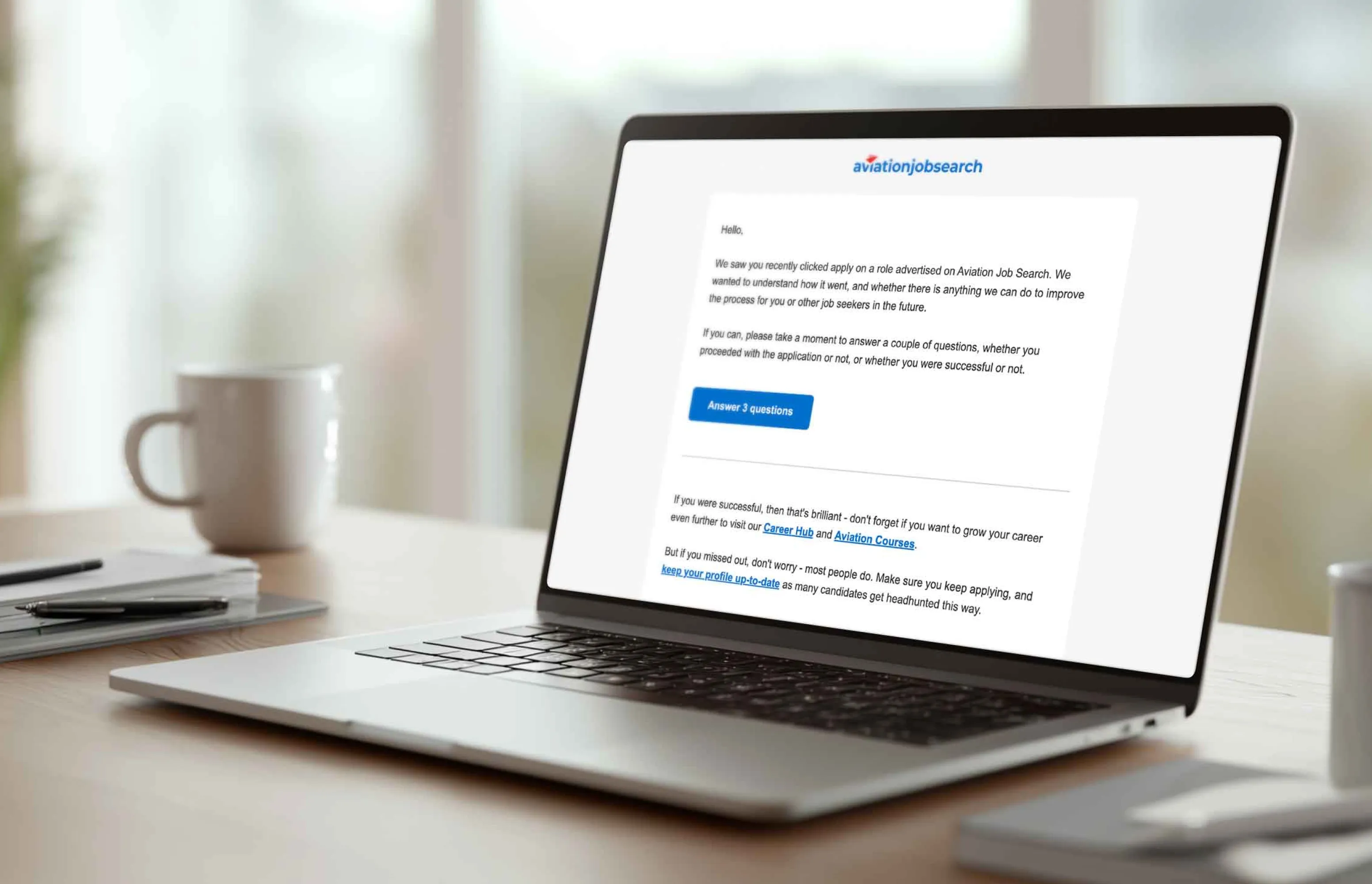
We speak to thousands of aviation professionals, whether that's pilots, cabin crew, engineers or ground ops staff, and a lot of that conversation is about what it's actually like to apply for a job right now.
So we decided to ask them directly. We have begun to survey aviation professionals who've recently applied for a role through Aviation Job Search, asking how the process went and whether they encountered any problems along the way.
Although these surveys are an ongoing effort, a few themes have already come up again and again from the first few hundred responses:
36.4% told us they didn't hear back from the employer after applying. 13.6% said they couldn't find clear information about salary.
And 11% said the application process itself was difficult to get through, whether that was a clunky external site, duplicate steps, or forms that didn't seem built with the candidate in mind.
Why this matters for recruiters right now
We all know the industry is struggling to fill vacancies. Airlines and aviation companies are drawing from the same relatively small pool of qualified candidates, so anything that makes your process harder to get through, or less appealing, risks losing that candidate to another recruiter.
When a third of candidates say they've applied and heard nothing at all, and when salary information is missing often enough that it shows up as a headline complaint, that's going to have an effect on how many people finish an application, and how many come back next time.
We already knew salary was a sticking point. In a previous survey, 55% of jobseekers told us they wouldn't apply for a job if there was no salary listed at all. So a fair chunk of your audience is deciding not to apply before they've even read what the role involves.
The law is starting to move in this direction too
Salary transparency isn't just something candidates are asking for. It's becoming something employers are required to provide.
Across the EU, since 7 June 2026, the Pay Transparency Directive requires employes to share the starting salary or salary range for a role, either in the job advert or before the first interview, and they're no longer allowed to ask candidates about their salary history.
The UK is heading in a similar direction. In July 2026, the government opened a consultation on reforming equal pay law, which includes a proposal that would require employers to publish salary or pay information in job adverts, or share it in writing before an interview if there's no advert.
The consultation runs until 27 October 2026, and the detail, such as whether it needs to be an exact figure, a range, or something like a benchmark rate, is still being worked out. But it's another sign that hiding pay information is becoming harder to justify, both to candidates and, increasingly, to regulators.
Where technology can help
The biggest complaint in our survey was about candidates not hearing back, and that's often less about the outcome and more about the silence. It creates trust issues and will stop candidates from applying for future positions, even if there was a genuine reason why they were not suitable for the original vacancy.
More than ever, recruiters have powerful tools such as ATS at their disposal that can take the pressure off. Automated status updates, simple acknowledgements when an application comes in, and clear next steps don't take much setting up, but they make a real difference to how a candidate experiences your process.
AI tools can help here too, whether that's drafting those updates, flagging candidates who've gone quiet in your pipeline or communicating better with them while they progress - or don’t.
None of this needs to mean overhauling your whole recruitment process. It's more about using what's already available to close the gap between what candidates say they need and what they're actually getting.
A free guide, if it helps
We've put together a free guide, Improving Job Advert Response, which goes into more detail on a lot of this, including how to write your salary correctly, why shorter adverts tend to perform better, and how to keep your application process as frictionless as possible. If any of the above sounds familiar, it's worth a read.
If you want to talk through your response rates, or anything else covered here, get in touch with our team.
About Aviation Job Search
Specialising in aviation recruitment, we give airlines and companies the tools to connect with aviation professionals so they can grow. Find out how we can help you today.